

Customer experience design (CX design) is the practice of managing every interaction a user has with your brand. It covers digital products, websites, support channels, and physical spaces. The goal isn't just a pretty interface. It is a cohesive journey that actually makes people want to stick around.
Most companies treat design as decoration. They polish the UI while customers struggle through broken flows and disconnected channels. The difference between a loyal client and a churn stat often lives in these messy, overlooked moments. When Brandhero Design evaluates customer experience, we look at the whole ecosystem, not just the screens.
What Makes Customer Experience Design Different from UI/UX
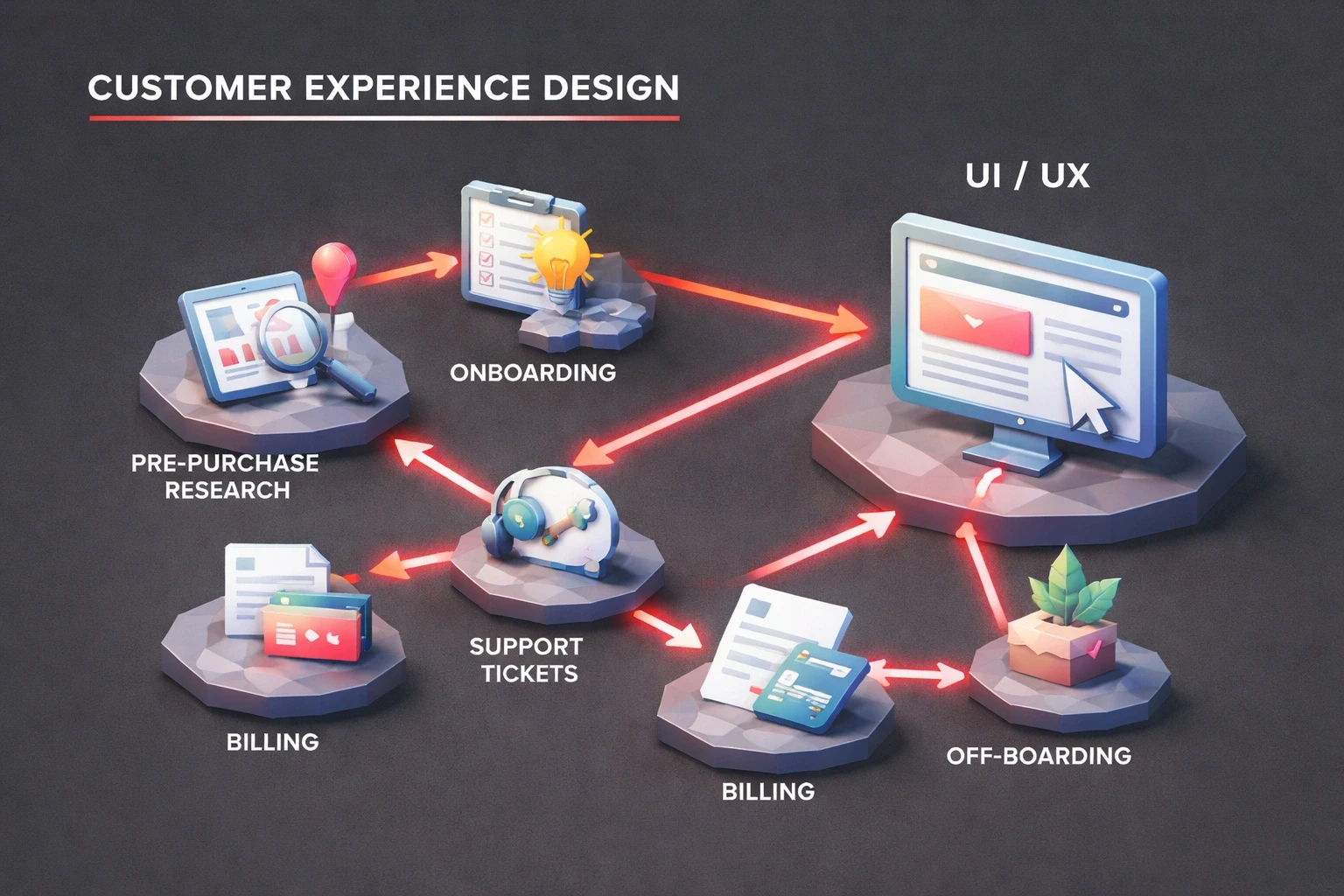
Customer experience design covers the entire relationship. UI/UX focuses specifically on digital interactions. CX is the broad view. It includes pre-purchase research, onboarding, support tickets, billing, and the offboarding process. UI/UX is just one piece of the puzzle.
Think of UI/UX design as one instrument in an orchestra. CX is the whole performance. But honestly, that metaphor is too clean. A beautiful app interface is useless if your support team contradicts the product messaging or the checkout flow feels sketchy.
The financial impact is real. Companies with mature CX practices see 1.5x higher employee engagement and 1.6x higher brand awareness, according to 2025 Forrester data. They also hit 1.9x average order value compared to companies that ignore CX. These gains come from consistency, not just visual polish.
Your branding work makes promises. CX design ensures you keep them. When things are misaligned, customers notice. They might forgive a confusing button. They won't forgive feeling deceived.
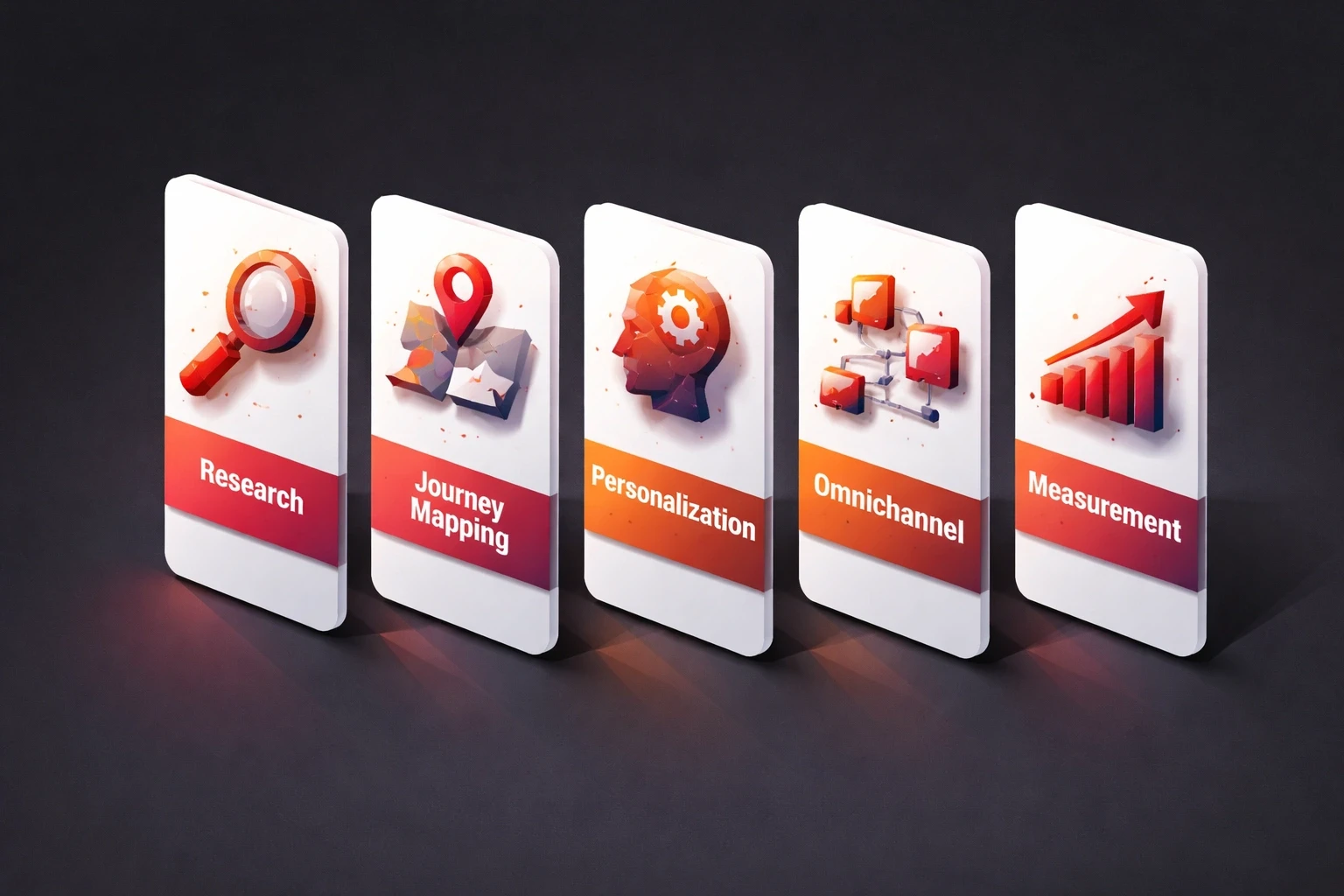
The Five Pillars of Strategic Customer Experience Design
Omnichannel Consistency
Omnichannel consistency means customers get the same experience everywhere. It shouldn't matter if they use the mobile app, website, email, phone, or a physical store. Inconsistency creates friction that kills trust faster than any competitor.
Map every channel your customers use. Document what each one promises and delivers. Most brands find ugly gaps here. Marketing screams "instant support" while the actual response time is three days. Your Webflow website might look innovative, but if your email templates look like they were built in 2010, the disconnect confuses people.
Walk the path yourself. Create accounts. Buy products. Contact support. Switch devices mid-journey. Note where the tone shifts or where you have to re-explain your problem. Every friction point costs you.
Technology helps, but it doesn't solve the human part. Unified data platforms let teams see history, sure. But humans have to design the protocols and train the staff.
Emotional Journey Mapping
Emotional journey mapping tracks how customers feel at each stage. This isn't just about task completion. It's about why people abandon carts or leave despite being functionally satisfied.
Start by identifying key stages for your business. SaaS tracks research, trial, activation, and renewal. E-commerce follows discovery, purchase, and delivery.
Interview real customers. Ask what concerns stopped them. Ask what surprised them. Data shows what happened. Interviews show why.
Plot these findings on a timeline. Highlight the peaks (delight) and valleys (pain). Fix the valleys first. The case studies we publish show that addressing emotional low points improves retention more than adding new features.
Service Design Blueprinting
Service blueprinting documents the system behind the interactions. It covers visible touchpoints, employee actions, and backend infrastructure. It connects internal operations to the external experience.
Traditional blueprints use horizontal swim lanes. Customer actions on top. Front-stage actions below that, then back-stage actions, then support processes.
This exposes operational rot. Checkout fails because fulfillment systems don't talk to inventory. Support agents can't see purchase history, forcing customers to repeat themselves. These aren't design problems. They are systems problems.
When working with startups, we often find that 60% of customer frustration comes from internal process gaps, not interface issues. Founders love feature roadmaps. They ignore the operational foundations. Blueprinting forces them to look.
Cross-Functional Collaboration Protocols
CX quality depends on product, marketing, sales, and support playing nice. Without protocols, siloed teams optimize their own metrics and wreck the overall experience.
Establish shared CX metrics. Net Promoter Score, Customer Effort Score, and Customer Lifetime Value only work if everyone owns them. Marketing shouldn't chase clicks if those users churn immediately. Sales shouldn't close deals that operations can't fulfill.
Review actual custom